
World Cup
The 2026 World Cup Group D opener between the United States and Paraguay on June 13 at 01:00 UTC will offer

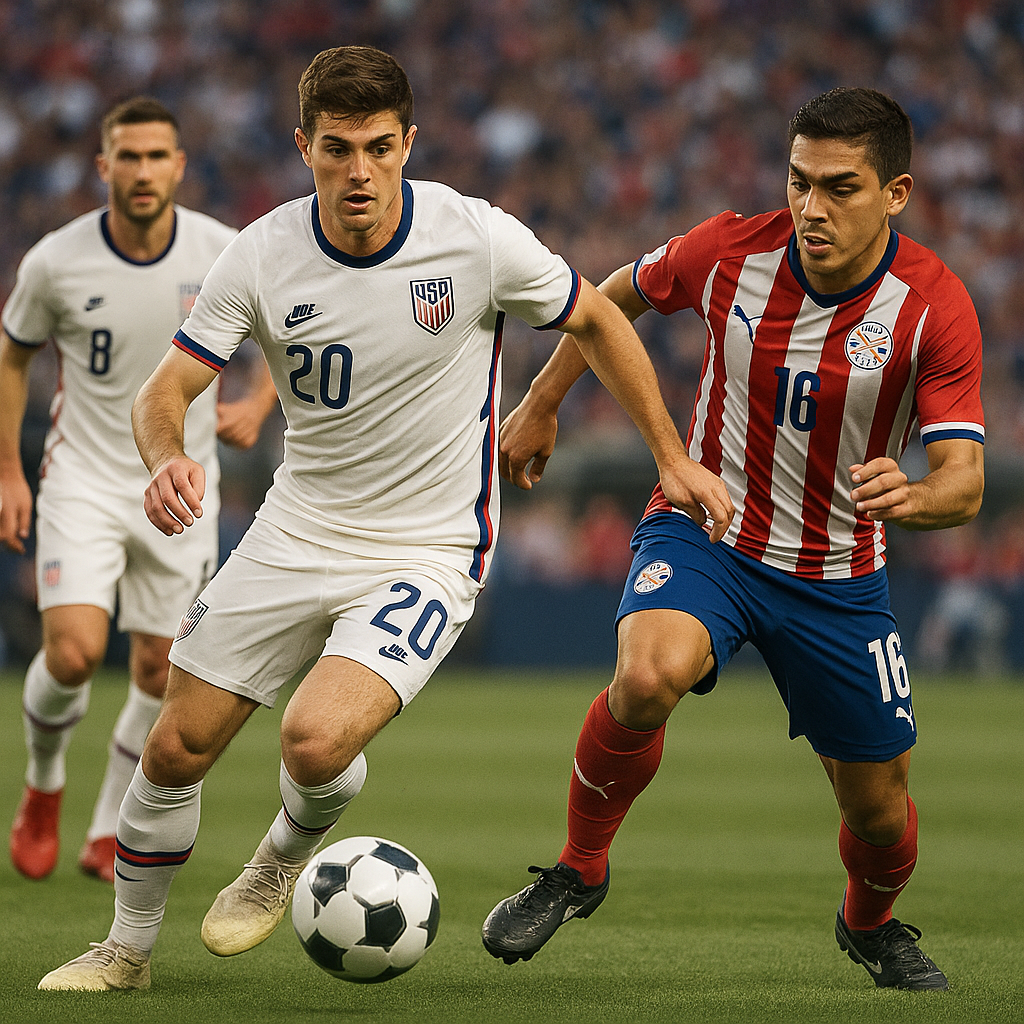
The 2026 World Cup Group D opener between the United States and Paraguay on June 13 at 01:00 UTC will offer significant tactical intrigue, spotlighting how the hosts’ structural coherence will match up against Paraguay’s more unpredictable approach. The setting demands scrutiny of team shape, transition management, and squad depth, where the United States holds measurable advantages.
The United States will rely on a structured, possession-oriented framework designed to balance offensive creativity with defensive solidity. Their midfield architecture typically operates as a pivot, facilitating quick transitions from deep possession to effective forward progression. Central to this is maintaining compactness between lines, limiting Paraguayan pockets of space in midfield zones that historically provide the opposition chances to strike. The home side’s ability to manage vertical and horizontal passing lanes will be critical—tight spacing and controlled ball circulation can disrupt Paraguay’s rhythm-management, forcing them into a reactive posture.
Paraguay, whose recent competitive pedigree reflects a more direct and counter-attacking style, will likely try to exploit transitional moments and wide channels behind the U.S. fullbacks. Their defensive organization has shown moments of rigidity but also vulnerability when stretched laterally. The U.S. squad depth gives them flexibility to adjust formations mid-game, switching between a 4-3-3 and a 3-5-2 variation depending on possession phases, which Paraguay may struggle to counter consistently over 90 minutes.
The decisive tactical battle will be in the midfield. Paraguay’s attempt to press aggressively risks exposing gaps for the United States to exploit quickly on the break. Conversely, if the U.S. fails to maintain discipline during defensive resets, Paraguayan counters could be sharp enough to cause disruption.
Given the stakes and the opening match dynamic, the United States can lean on superior preparation, structured possession, and tactical versatility. Nonetheless, the encounter will test the hosts’ ability to neutralize a lower-profile but tactically astute opponent capable of rapid transitions. Form and strategy align to suggest the United States should control the tempo but must be wary of lapses that Paraguay can punish swiftly.