
World Cup
Australia’s opening match in Group D of the 2026 FIFA World Cup against Turkey is set to be a tactical

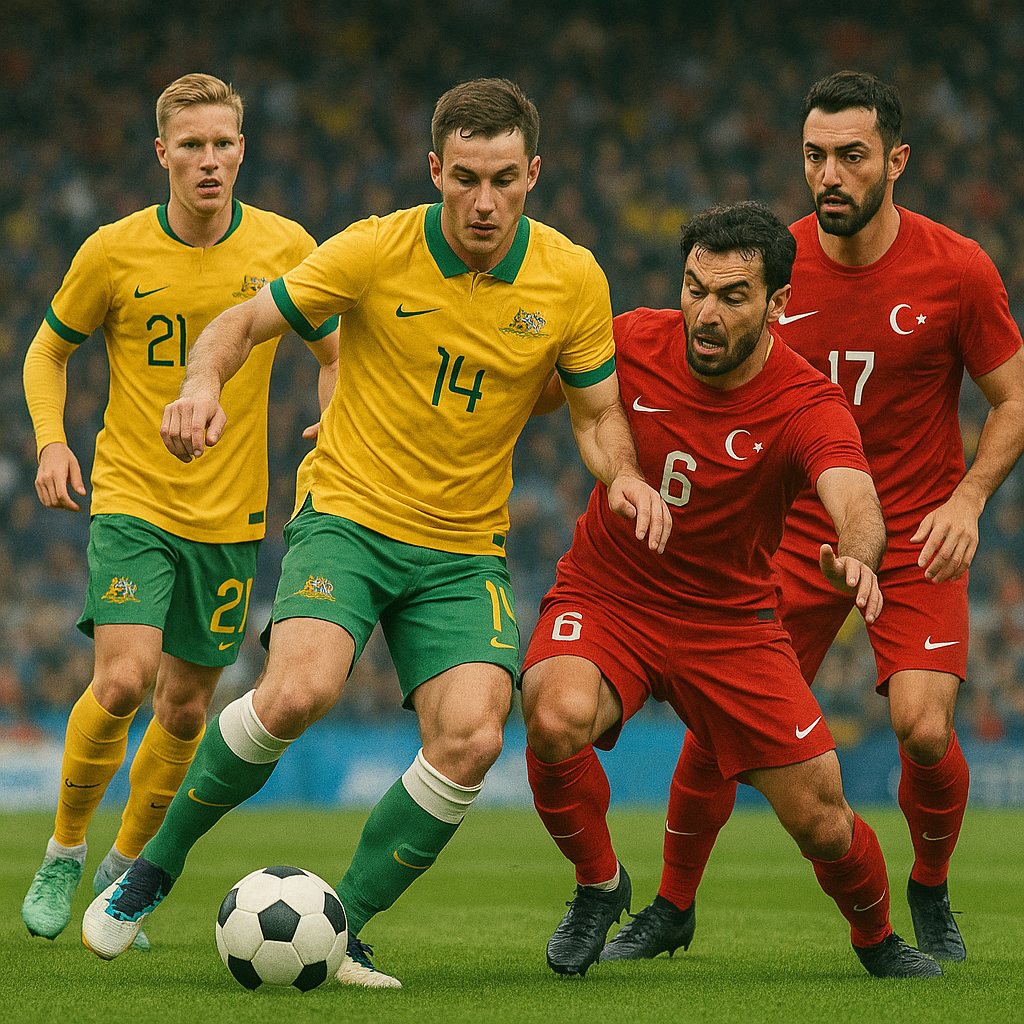
Australia’s opening match in Group D of the 2026 FIFA World Cup against Turkey is set to be a tactical examination as much as a physical contest. Scheduled for June 14 at 04:00 UTC, this fixture presents Australia with a classic strategic challenge: how to balance their trademark structural discipline against a Turkish side known for their resilience and fluidity in transition.
Australia’s historical World Cup performances have leaned heavily on organisation and compactness, particularly in defensive phases, a necessity when often under pressure from technically superior opponents. The Socceroos typically operate with a midblock that shifts coherently across the back line, aiming to force opponents wide and congestate central channels. This structure, combined with disciplined pressing triggers, makes them tough to break down — but it demands near-perfect coordination in switching between phases of possession and defence.
Turkey, conversely, is less rigid and more opportunistic in their approach. Their gameplay frequently hinges on rapid counterattacks and exploiting spaces behind an opposition’s fullbacks. For Australia, this translates into a need for acute awareness during defensive transitions. The challenge lies in blending their structured defensive lines with swift recovery runs to prevent Turkish attackers from capitalising on isolated moments.
From a tactical lens, the contest will likely pivot on Australia’s ability to maintain midfield control and tempo management. If the Socceroos can execute clean, progressive build-up play from a stable base — forcing Turkey to commit numbers forward — they improve their prospects of both ball retention and quality chances. Failure to do so will risk inviting Turkish counters, where their wide forwards can fracture Australia’s shape.
Set-piece proficiency may also be a subtle but decisive margin. Australia’s physicality and aerial presence could be leveraged to disrupt Turkey’s rhythm, particularly in tight moments where open play chances are scarce. However, this requires precision in delivery and coordinated runs—areas that have shown variability in Australia’s recent play.
In sum, the match promises a tightly-contested tactical duel defined by structural discipline and moment-to-moment transitions. Australia’s progression in the group will begin by executing their system with the precision it demands while mitigating the fluid offensive thrusts Turkey will undoubtedly bring. This game is a foundational test—not just of talent, but of the Socceroos’ ability to impose order amid high-stakes flux.