
World Cup
Group D: Turkey and Defensive Under Pressure

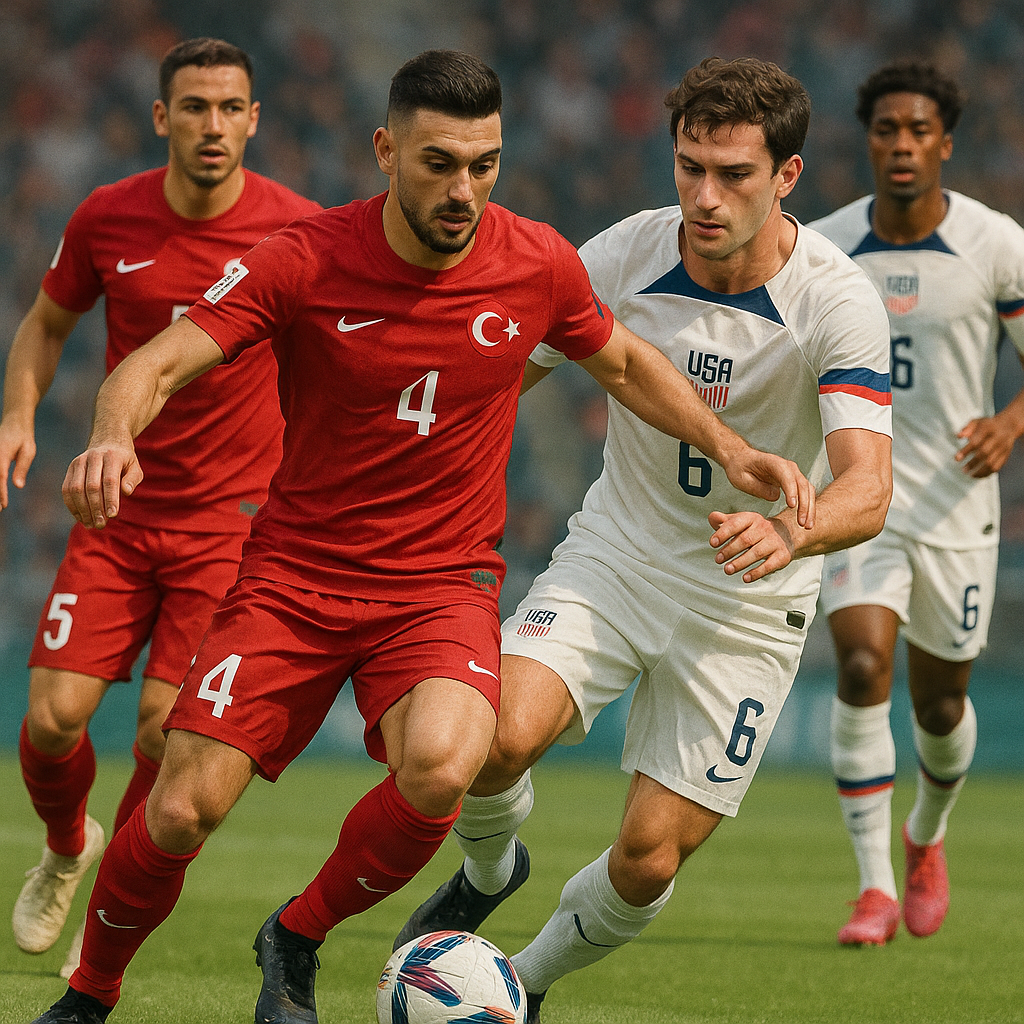
Turkey’s Defensive Rigidity Meets U.S. Structural Adaptability in Group D Clash
The upcoming Group D fixture between Turkey and the United States offers a compelling tactical contest defined by contrasting approaches. Turkey’s emphasis on defensive organization will directly test the United States’ capacity to exploit transitions and squad depth.
Turkey enters this FIFA World Cup match with a clear structural identity grounded in disciplined defensive shape. Their compact lines and coordinated pressing in midfield limit opponents’ space centrally, forcing rivals into wide channels where risks increase. This defensive rigidity is built on collective positioning, reducing avenues for penetration and simplifying the task of regaining possession. However, it also constrains Turkey’s offensive fluidity, relying heavily on set pieces or counterattacks from deep.
In contrast, the United States possess greater tactical flexibility marked by dynamic transitions and rotational midfield roles. Their midfield structure frequently expands and contracts, allowing for overloads in wide or advanced zones. Crucially, the U.S. can swiftly shift from a possession-oriented build-up to rapid vertical breaks, exploiting momentary imbalances Turkish defenders may present when moving forward. This capacity to manipulate tempo and space is integral to countering Turkey’s defensive posture.
That matters because the key battle will unfold between Turkey’s controlled compactness and the U.S.’s intent to destabilize it through layered positional rotation and depth utilization. The United States’ squad depth allows for nuanced adaptations during the game, including reinforcing midfield creativity or accelerating flank incursions. Conversely, Turkey’s challenge lies in maintaining their defensive discipline under sustained pressure and avoiding exposure in transition phases.
This structural dichotomy ensures the Turkey versus United States match is more than a physical clash—it is a tactical confrontation where the balance between defensive solidity and transition potency will determine Group D standings. Success for the United States hinges on fluidity and exploiting brief Turkish vulnerabilities, while Turkey’s best hope rests on enduring discipline and seizing rare offensive moments.