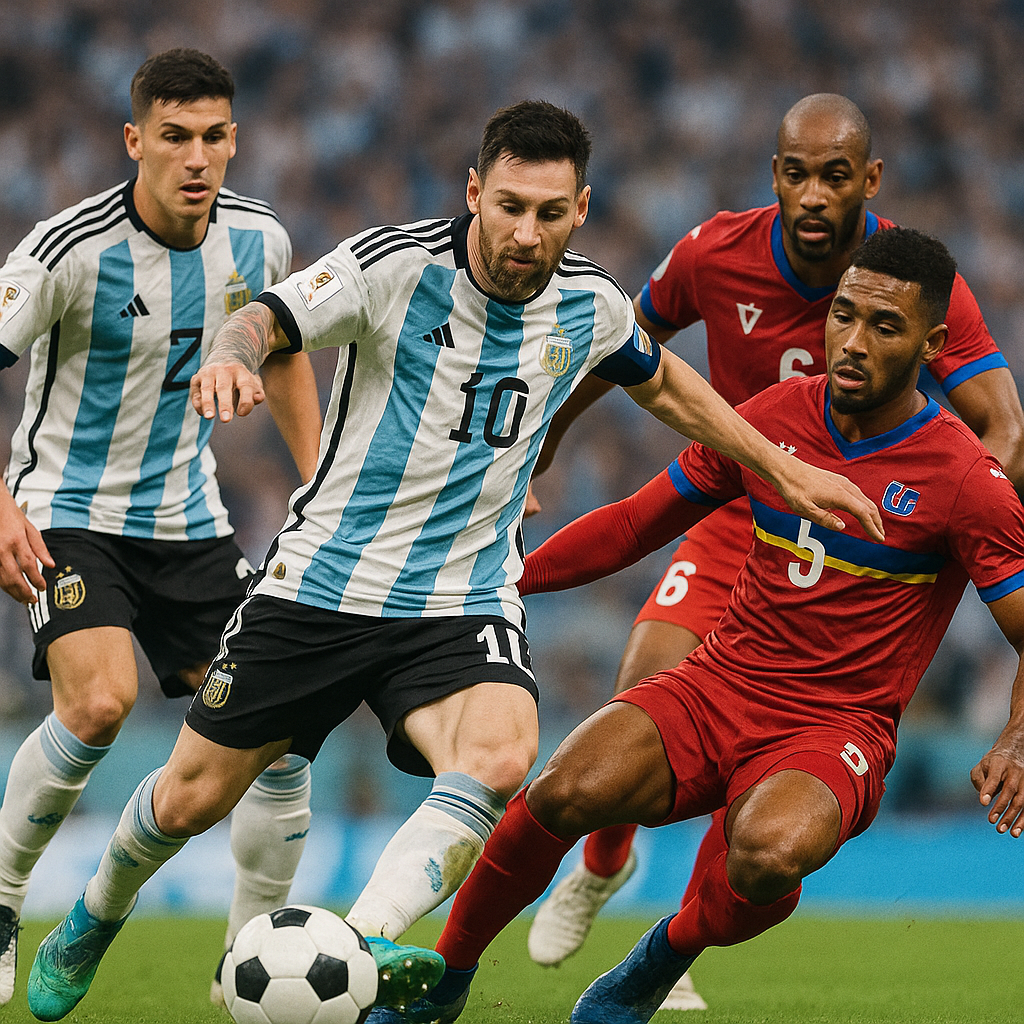
Argentina 3, Cape Verde Islands 2: Narrow escape but hearts unbowed
Cape Verde Islands nearly rewrote the script against a football titan, pushing Argentina to the edge before conceding a narrow 3-2 loss. This was not a mere footnote in World Cup history; it was a vivid statement of island pride flashing at full volume.
From the first whistle, Cape Verde threw caution to the wind, disrupting the rhythm of a favored Argentine side hungry for control. The two goals they punched through didn’t just rattle the cage—they lit a fire for all underdogs watching. However, the key shift came as Argentina’s clinical edge sliced through Cape Verde’s resilient defense, nudging the scoreline past the tipping point. That close margin speaks volumes about Cape Verde’s courage and burgeoning football identity on the world’s toughest stage.
Though the points slid away, Cape Verde leaves the pitch with heads held high—no longer just participants, but challengers who dared to take on giants and nearly rewrote the narrative.
The panel responds
Álvaro Castillo replies to Moussa Okafor
Argentinian and Cape Turn Up the Heat
Early scorelines created a loud narrative, but the deeper question is whether the evidence survives harder opposition.
The tension is clear: That matters because it signals a team still grappling with balance during transitions despite their historic strengths. The fragility seen here is not systemic failure but an urgent tactical challenge to reinforce. But can this model survive tougher transitions?
That matters because it signals a team still grappling with balance during transitions despite their historic strengths. The fragility seen here is not systemic failure but an urgent tactical challenge to reinforce. That is the unresolved edge behind Argentinian and Cape Turn Up the Heat.
Aissatou Traoré replies to Moussa Okafor
Cape Verde’s tactical identity nearly unsettled Argentina
Cape Verde’s narrow 3-2 loss to Argentina revealed a team able to stretch a top-tier opponent through disciplined structure and fluid transitions. Their resilience was evident but also exposed key vulnerabilities against sustained pressure.
The core question remains: how can Cape Verde maintain balance when shifting from an organized defensive block to effective counterattacks? Against Argentina, their compact midfield limited space effectively in phases, but the fatigue and momentary lapses in positional discipline allowed Argentina’s creative players to exploit seams. Cape Verde’s transition from defense to attack showed promise—quick, vertical balls aimed to catch the Argentine backline off-guard—but lacked consistent execution in the final third, particularly under intensified pressing.
That matters because while tactical shape held strong for much of the game, Cape Verde’s limited squad depth means those weaknesses could be costly against even more clinical opponents. Still, the narrow margin underlines a potential blueprint: remain structurally sound, optimize transition speed, and develop sharper finishing. That combination could unlock further competitiveness on the world stage.