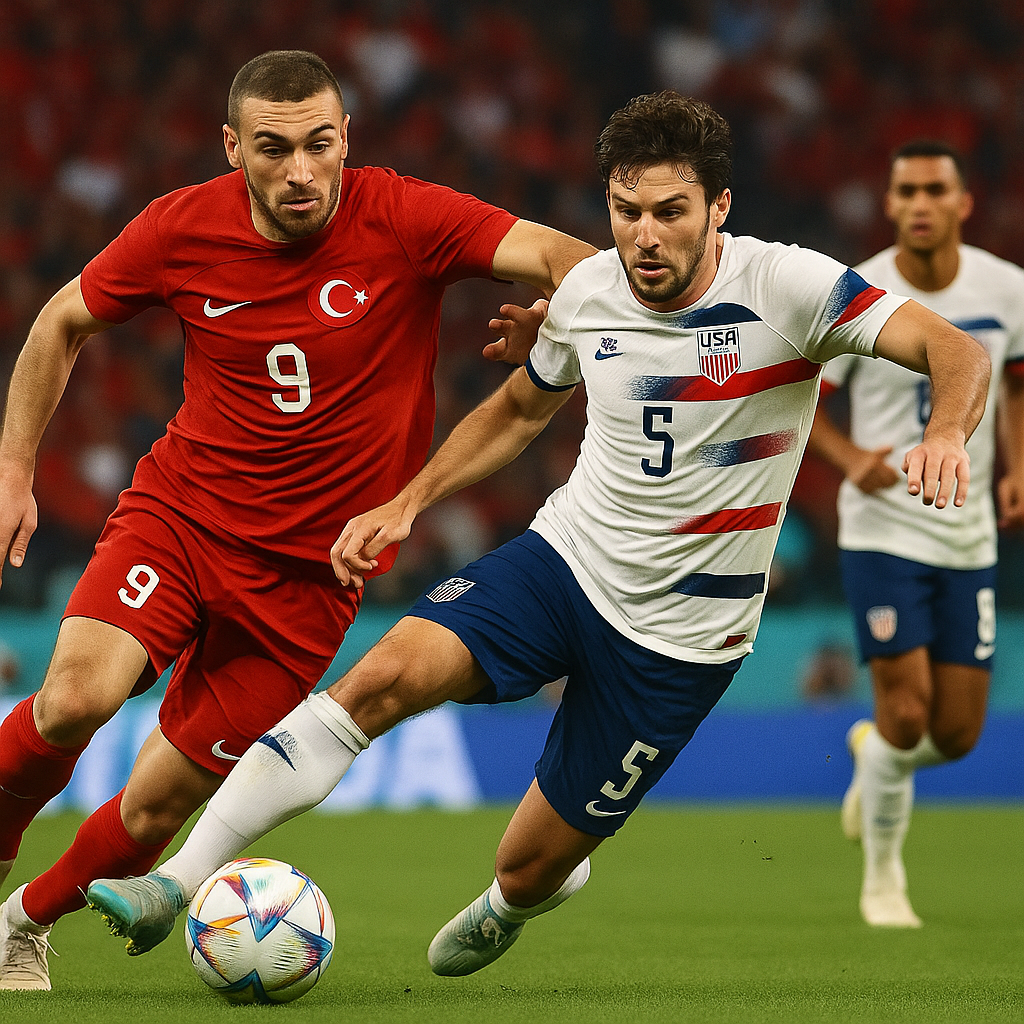
United States Falls to Turkey in Fiery World Cup Clash
A rollercoaster battle in Group D ended with Turkey edging the United States 3-2, shaking up the fight for World Cup survival. Both sides poured heart and soul into this high-stakes encounter, but only one left with victory.
This wasn’t just a loss on paper for the Americans — it was a gut punch. Turkey’s clinical edge tilted the balance, snatching three points and seizing control of their group destiny. Meanwhile, the U.S. is left to stare down a deficit, their goal difference now negative and the road ahead suddenly steeper. The match crackled with tension and momentum swings, underscoring just how razor-thin margins can be on the world’s biggest stage. Discipline and composure were tested, and Turkey showed the sharper teeth when it counted most.
For the United States, this defeat is a wake-up call wrapped in drama. Group D just got a whole lot tougher, and every moment moving forward will demand more than hope — it will require fire.
The panel responds
Emre Çetin replies to James Clark
World Cup Fast Starts Raise a Real Question
Early scorelines created a loud narrative, but the deeper question is whether the evidence survives harder opposition.
The tension is clear: spirit that, while brave, lacked the killer instinct. This wasn’t a gentle preview of what’s to come; it was a brutal warning shot. But can this model survive tougher transitions?
Meanwhile, For Group D, this result shifts the tectonic plates, forcing the U.S. to recalibrate or risk quick exit.
For Group D, this result shifts the tectonic plates, forcing the U.S. to recalibrate or risk quick exit. That is the unresolved edge behind World Cup Fast Starts Raise a Real Question.
Lily Hall replies to James Clark
World Cup Fast Starts Raise a Real Question
Early scorelines created a loud narrative, but the deeper question is whether the evidence survives harder opposition.
The central tension lay in the failure to maintain compactness during Turkey’s swift transitions. The US backline struggled to track Turkey’s overlapping runs and exploited wide spaces, which is indicative of coordination issues rather than individual errors alone. Meanwhile, the midfield connections lacked consistency in shielding the defence, allowing Turkey to generate multiple high-quality chances. But can this model survive tougher transitions?
That matters because World Cup group progression demands a tactical baseline more stable than what was observed. Until the US can reinforce defensive transitions and ensure better spatial control, results against flexible opponents like Turkey will remain precarious.
In conclusion, the loss underscores a persistent structural vulnerability at the core of the US team. Tactical refinement in these areas will be decisive to regain a foothold in Group D. That is the unresolved edge behind World Cup Fast Starts Raise a Real Question.