
World Cup
Switzerland opens its 2026 FIFA World Cup campaign on June 18th at 19:00 UTC with a home fixture against

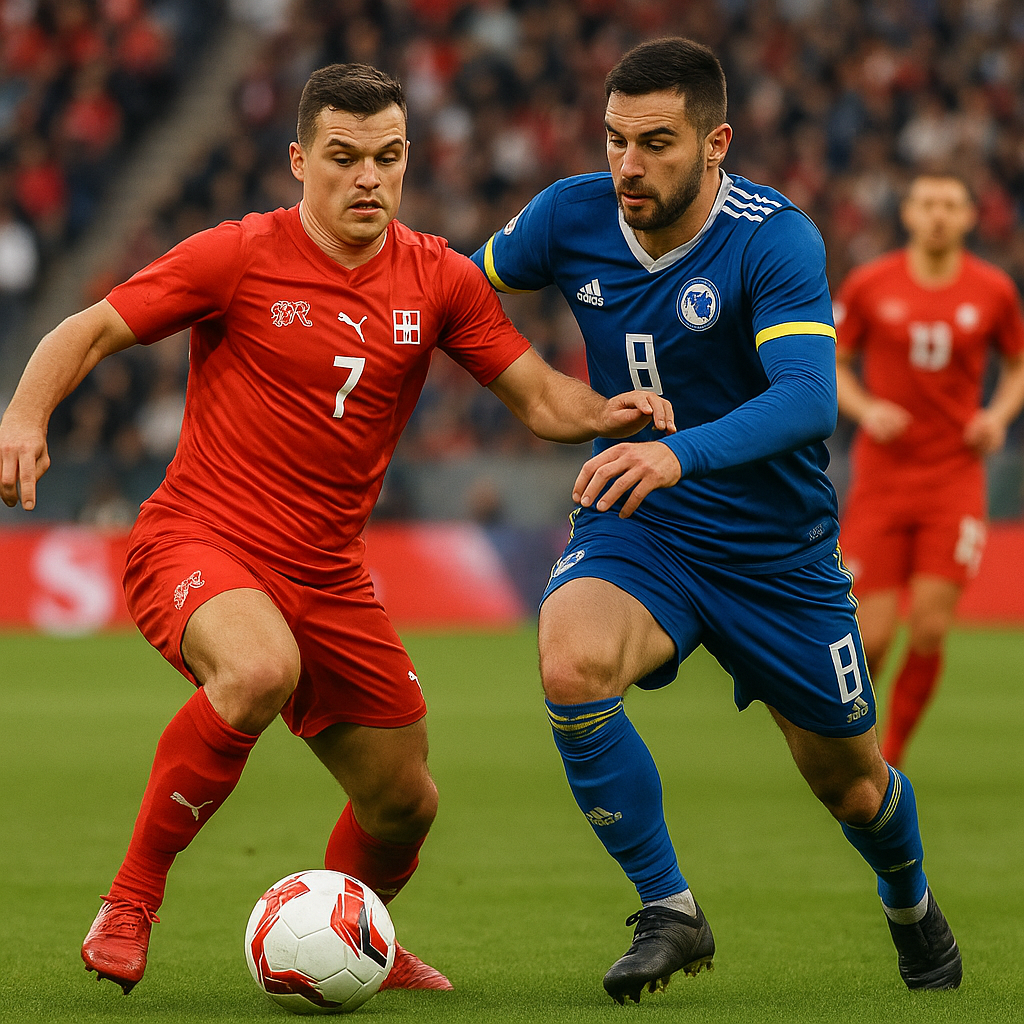
Switzerland opens its 2026 FIFA World Cup campaign on June 18th at 19:00 UTC with a home fixture against Bosnia-Herzegovina in a crucial Group B encounter. The tactical architecture of this game demands close scrutiny; the Swiss side’s structural discipline will face a stern test against Bosnia’s physicality and transitional threat.
Switzerland’s recent identity has centered on compact defensive blocks combined with rapid, vertical transitions. Their 4-2-3-1 or 3-4-1-2 base formations rely heavily on a disciplined double pivot to shield the backline while facilitating quick ball circulation. The success of their pressing and buildup phases hinges on maintaining positional discipline, ensuring the team does not become overstretched between lines. Early evidence suggests the Swiss will prioritize controlling the midfield channel, limiting Bosnia’s ability to progress through the center.
Bosnia-Herzegovina, by contrast, tends to emphasize powerful counterattacks and exploiting wider areas, leveraging robust physical presence to disrupt possession phases. For Switzerland, the challenge lies in compacting space not just centrally but also in wider corridors, preventing Bosnia’s wing play from generating dangerous overloads or crosses. Switzerland’s full-backs must balance caution with timing, avoiding exposure to risky turnovers in transition.
Another critical facet is the management of set-piece scenarios. Both teams have historically been tied to physical duels in dead-ball situations, giving Switzerland an edge if their organizational coherence holds. Bosnia’s direct approach may also force Switzerland into a reactive posture at moments, testing their collective discipline.
This opening fixture’s outcome will hinge on Switzerland’s ability to maintain balance between controlled possession and efficient transitions — a task demanding tactical clarity and mental resilience. The structural integrity of their defensive block and effectiveness of their pivot in breaking up Bosnia’s direct play will be determinant. This match sets the tone not only for points but for Switzerland’s tactical narrative in a demanding Group B.