
World Cup
Switzerland and Algeria Turn Up the Heat

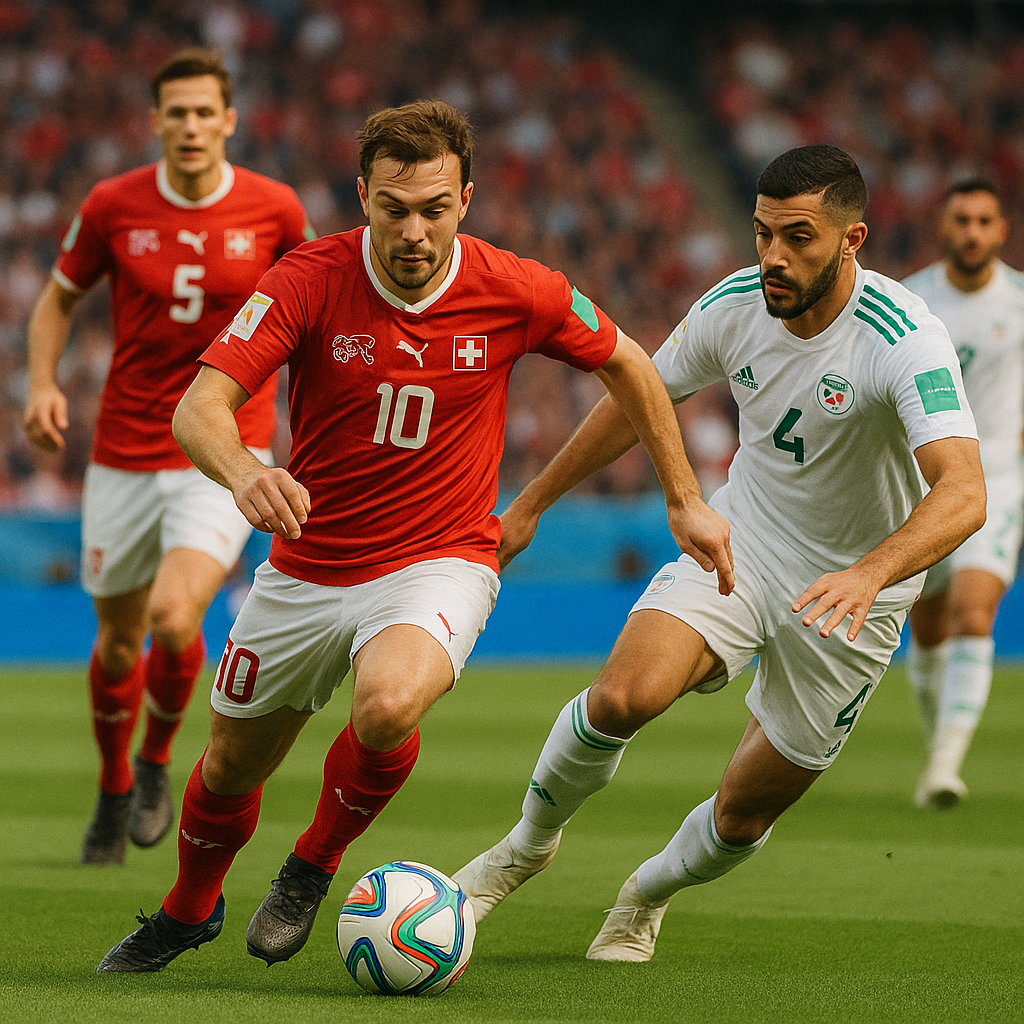
Switzerland’s structured efficiency silences Algeria in World Cup opener
Switzerland’s 2-0 victory over Algeria in the round of 32 demonstrated clear tactical discipline and transition control, allowing the Swiss side to impose their game while effectively neutralizing Algerian momentum. The win advances Switzerland with three valuable points and a clean goal difference, stalling Algeria’s campaign at a critical knockout stage.
The core question coming into this fixture was whether Switzerland could impose their measured tactical blueprint against an Algeria side often known for spirited counterattacks and dynamic midfield play. From the outset, Switzerland established a compact defensive base with disciplined lines that limited space in central corridors. This structural solidity forced Algeria wide, where Swiss fullbacks could engage without excessive risk.
However, Switzerland’s advantage extended beyond defensive rigidity. Their ability to transition quickly from regain to attack was decisive. Through a combination of mid-block positioning and rapid vertical passing, the Swiss exploited Algeria’s occasional susceptibility during moments of offensive commitment. The result was two goals that underscored Switzerland’s efficiency rather than flamboyance. Notably, the team’s spatial awareness and controlled tempo minimized Algeria’s chances to build sustained pressure.
Nonetheless, the performance also revealed constraints. Switzerland were not free from moments of hesitation, particularly in breaking Algeria’s defensive lines deeper in the second half. This lack of variety in attacking approaches could invite problems if matched by more tactically adaptive opponents. Moreover, limited offensive output beyond the two goals suggests the Swiss may still balance risk conservatively in knockout scenarios.
From a disciplinary standpoint, the available data does not detail any card accumulation influencing the match dynamic, indicating Switzerland’s focus remained tactical rather than reactionary. The win enhances their standing, adding crucial points and positive goal difference at this phase, putting them in a strong position moving forward.
In total, Switzerland’s methodical approach prevailed through structural discipline and transition efficiency, offering a model of how measured tactical management can unlock knockout ties without relying on overt individual flair. Against a resilient Algerian setup, it was the Swiss system – calm, precise, and error-minimizing – that ultimately dictated the outcome.