
World Cup
South Korea’s 2-1 victory over Czechia in this early World Cup Group A fixture showcased a disciplined

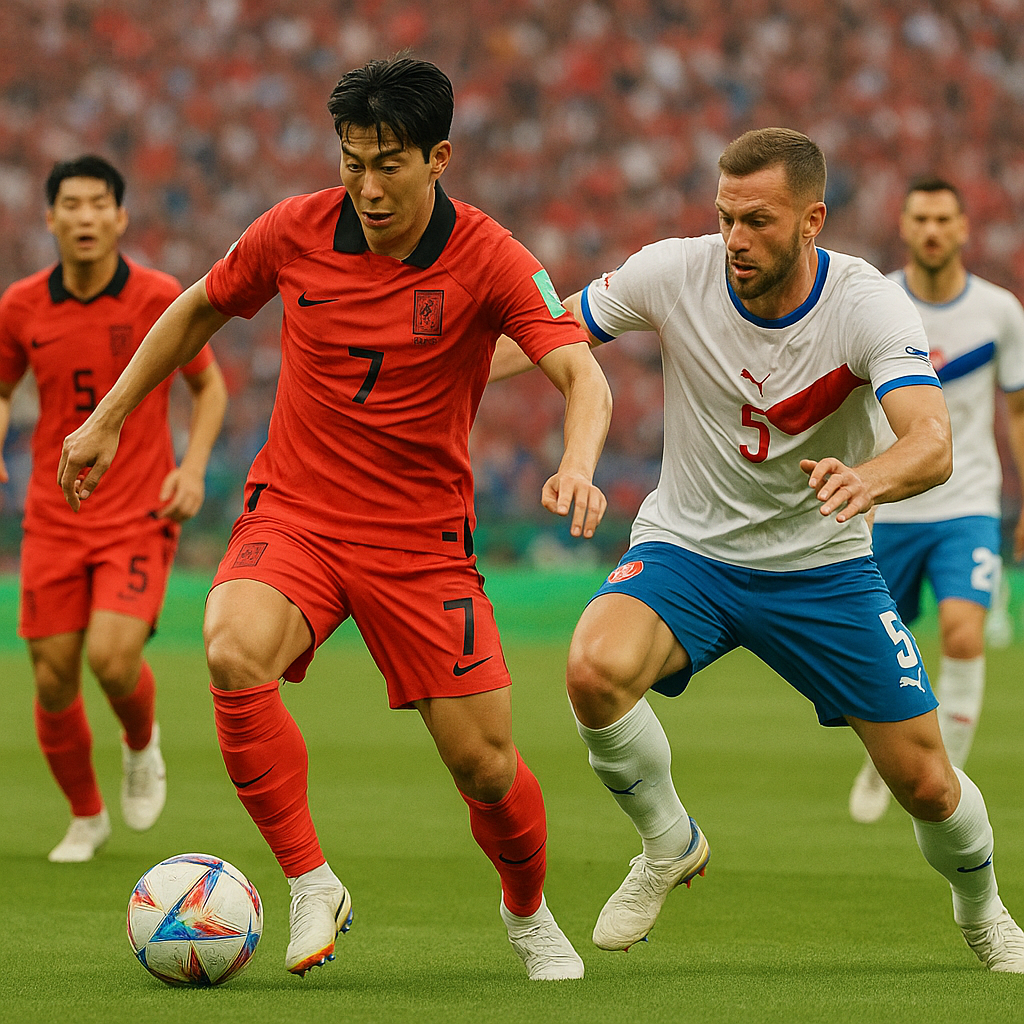
South Korea’s 2-1 victory over Czechia in this early World Cup Group A fixture showcased a disciplined tactical framework underpinned by efficient structural transitions and reactive pressing. The win, secured on June 12, 2026, positions South Korea advantageously in a group that includes Mexico and South Africa, where margin for error remains scant.
From the outset, South Korea deployed a flexible 4-2-3-1, with dual pivot midfielders maintaining positional discipline to shield the back four. This choice stabilized transitions, particularly against Czechia’s attempts to build centrally. The South Korean midfielders demonstrated tactical awareness in controlling tempo, a critical improvement over previous international outings where transitions lacked cohesion. The team’s ability to recover possession in midfield zones disrupted Czechia’s rhythm, allowing rapid counters that ultimately yielded both goals.
Defensively, South Korea adopted a mid-block structure that compressed passing lanes between midfield and defense, forcing Czechia into wide channels. This spatial manipulation limited Czechia’s effectiveness in penetrating the central areas, an approach that paid dividends despite Czechia’s persistent probing on the flanks. South Korea’s full-backs, operating with discipline, balanced defensive roles with timely overlapping runs, adding an unpredictable offensive dimension without compromising the backline’s integrity.
Discipline and concentration were evident through the absence of reckless fouls or undisciplined challenges, a notable factor given Czechia’s physical approach. This composure translated into tactical consistency over 90 minutes and minimized opportunities for the opposition to capitalize on set-piece situations.
Though the match was narrowly decided, the victory reflects South Korea’s growing tactical maturity on the world stage: deliberate in structure, efficient in transition, and rigorous in defensive organization. The results elevate their standing within Group A, laying a foundation for continued progress. However, South Korea must now sharpen attacking fluidity and far-side switching if they are to withstand the varied styles awaiting in the group phase.
Ultimately, the match was a controlled and carefully managed performance rather than an explosive breakthrough. South Korea’s methodical approach, blending measured aggression with strategic discipline, remains their most reliable path forward.