
World Cup
France and Iraq Turn Up the Heat

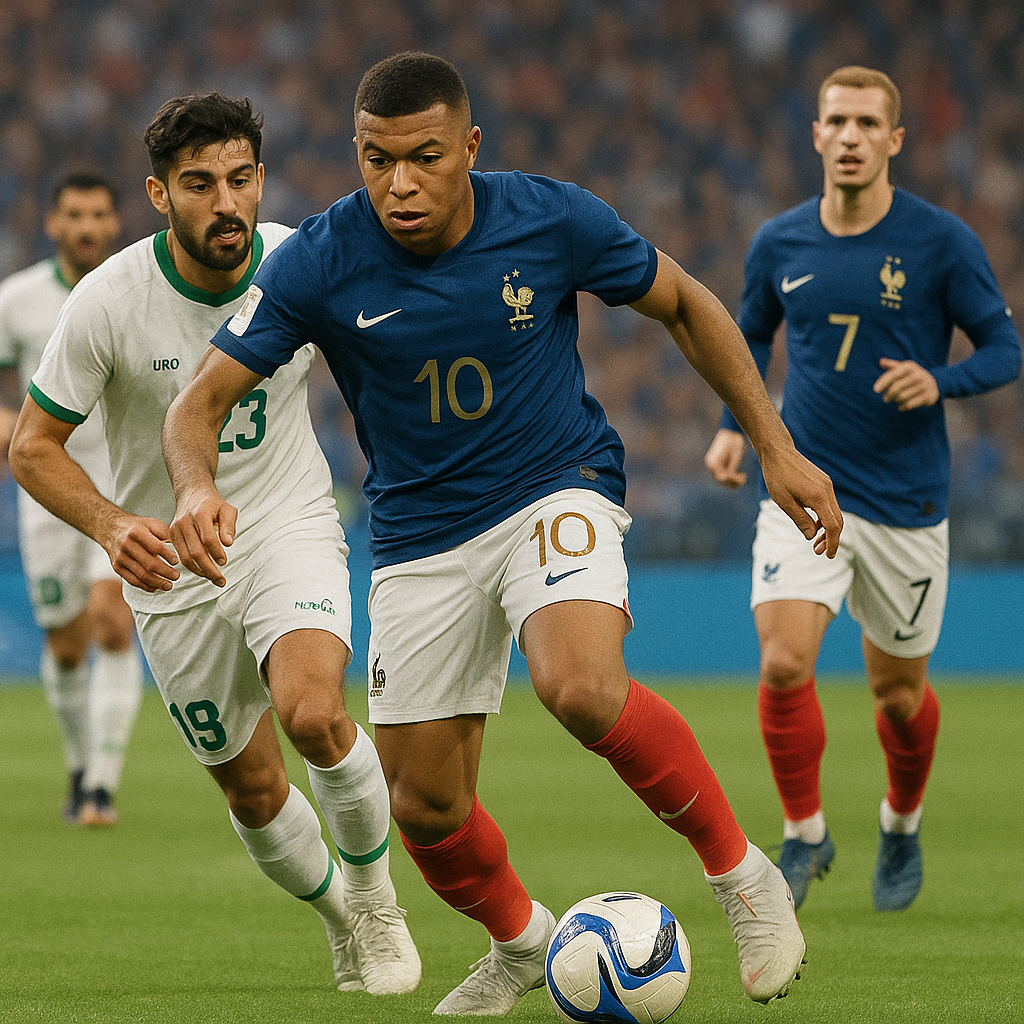
France’s dominance confirms group ambitions against Iraq
The result boosts France’s confidence and goal difference while posing immediate questions about Iraq’s competitive resilience.
The match’s central tension revolved around France’s approach versus Iraq’s ability to disrupt it. France imposed a structurally sound system focused on fluid transitions and squad depth, effectively using wide channels and midfield compactness to dismantle Iraq’s disorganized defensive shape. This control limited Iraq’s offensive opportunities, leaving them unable to mount sustained pressure throughout the 90 minutes.
France’s forward momentum was underpinned by crisp positional rotations in midfield and high-tempo ball circulation. These tactical choices eroded Iraq’s ability to press cohesively, creating numerical advantages in attacking zones. The key shift came when France exploited quick vertical passes to bypass the Iraqi midfield screen, resulting in clinical finishing reflected in the three-goal margin. Defensively, France maintained disciplined line integrity and effective transitional cover, nullifying Iraq’s counterattacks.
Simultaneously, Iraq’s major weakness emerged from unstable defensive coordination and a lack of midfield control, which compounded their inability to retain possession or threaten France’s goal. These deficiencies were especially costly given the high level of France’s tactical organisation and depth in quality personnel, which allowed them to adjust seamlessly to varied in-game scenarios.
Meanwhile, Iraq faces a pressing need to restructure how they deal with multifaceted pressing and transitional phases if they wish to remain competitive in the group.
Overall, the match underscored France’s tactical maturity and squad coherence. Their ability to control tempo, exploit structural weaknesses, and maintain discipline promises significant potential in this tournament phase. The groundwork of precision and depth they established today is a blueprint for sustained success.