
World Cup
Spain and Clinical Turn Up the Heat

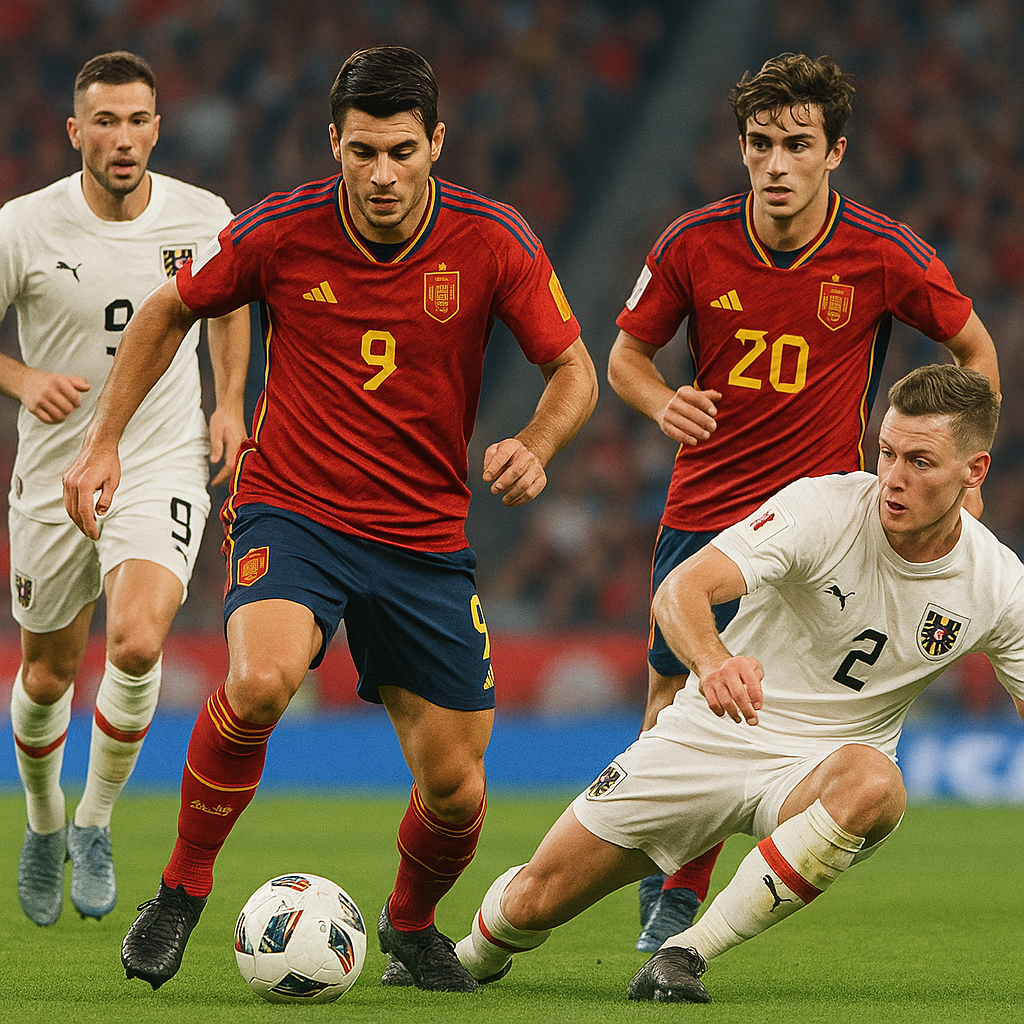
Spain’s Clinical Efficiency Exposes Austria’s Tactical Shortcomings
Spain’s 3-0 World Cup victory over Austria was a harsh tactical lesson for the visitors, underscoring Austria’s difficulty in managing transitions and maintaining structural coherence against a superior possession side. This result leaves Austria with no points and a significant negative goal difference, complicating their path in the tournament.
From the outset, Spain imposed their characteristic control, leveraging crisp, high-tempo passing sequences to dominate midfield zones. Austria struggled to disrupt Spain’s circulation, which mattered because it prevented any sustained attacking momentum for the visitors. Spain’s ability to overload and shift quickly exploited Austria’s positional rigidity, particularly in the transitional phases after losing possession. This tactical imbalance allowed Spain to orchestrate multiple forward surges with numerical superiority, resulting in three well-constructed goals.
Austria’s defensive organization appeared disjointed. The backline frequently found itself stretched horizontally, creating exploitable gaps between lines. Meanwhile, Austria’s midfield failed to assert presence or provide timely pressure to force errors, a critical weakness against a team as balanced as Spain. The lack of effective double-pivot shielding meant Spain’s creative outlets operated with minimal restraint, enhancing the threat from wide and central areas.
Additionally, Austria’s offense lacked penetration under consistent pressure. Without control of midfield, their transitions became hurried and predictable, allowing Spain’s defenders to reset efficiently. This compounded Austria’s difficulty in building attacking phases, contributing to the goalless return and widening the margin on goal difference.
In consequence, Austria now faces a demanding task to recalibrate their structural approach. Spain’s display reaffirmed the premium placed on control, positional fluidity, and transition management at this level. For Austria, addressing these tactical vulnerabilities will be essential to regain competitive footing in the group stage. Until then, Spain’s victory remains a testament to precise football intelligence overpowering Austrian rigidity.