
World Cup
Morocco and Netherlands Turn Up the Heat

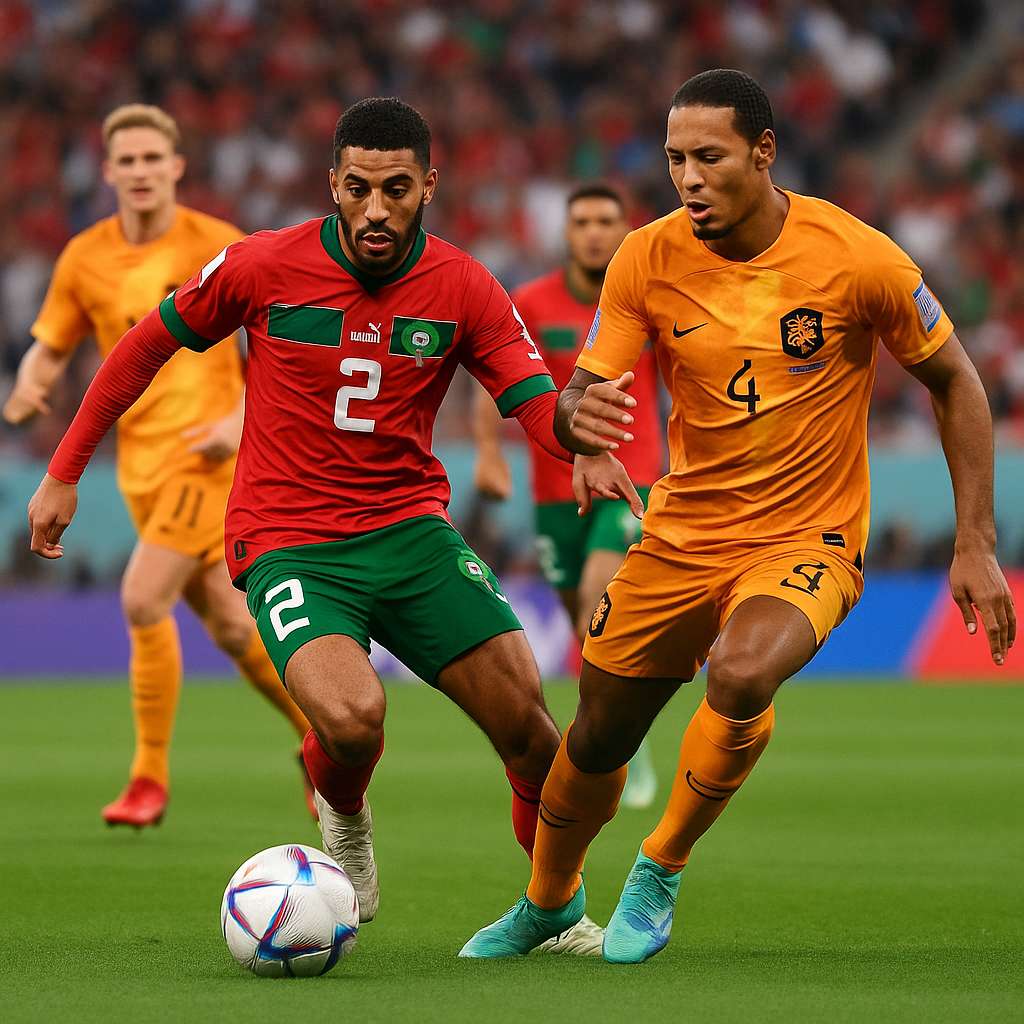
Morocco asserts tactical maturity in thrilling 4-3 win over Netherlands
Morocco’s narrow victory over the Netherlands in this World Cup last-32 tie was defined by sharp transitional play and resilience under pressure. The 4-3 scoreline masks a deeper story about Morocco’s disciplined structure and ability to capitalize on key moments amid a high-tempo encounter.
The central question heading into the match was whether Morocco’s tactical setup could withstand the Dutch offensive fluency and exploit the spaces left behind. From the outset, Morocco demonstrated a compact defensive block that absorbed sustained pressure without ceding structural coherence. This base allowed them to maintain defensive shape even when the Netherlands forced turnovers in advanced positions.
That discipline in defense was critical because Morocco’s attacking transitions were their main weapon. The key shift in momentum occurred when Morocco exploited rapid breaks, converting these opportunities clinically. Their ability to switch from a low block to sharp counterattacks unsettled the Dutch backline repeatedly. These moments appeared less about individual brilliance and more a product of clear team training focused on quick vertical passes and synchronized forward runs.
At the same time, Morocco’s squad depth paid dividends in sustaining intensity throughout the match. Even with seven goals scored between the teams, Morocco’s rotation and management of players ensured they maintained sharpness in their press and midfield recoveries. This balance is significant in a World Cup’s knockout environment where game management is as vital as attacking impetus.
The concession of three goals highlights some unavoidable defensive vulnerabilities against a high-quality Dutch frontline, but overall, Morocco’s ability to balance risk and structure tilted the result in their favor. The win not only provides Morocco with crucial points and a positive goal difference but confirms their evolving identity as a tactically sophisticated side, capable of thriving under pressure and in fast-changing match scenarios.
In conclusion, Morocco’s performance demonstrated how disciplined organization combined with intelligent transitions can overcome technically superior opposition. This victory advances Morocco’s position and sets a clear tactical template for their continued World Cup campaign.