
World Cup
Uzbekistan’s 1-3 group-stage defeat to Colombia in the FIFA World Cup Group K represents a significant

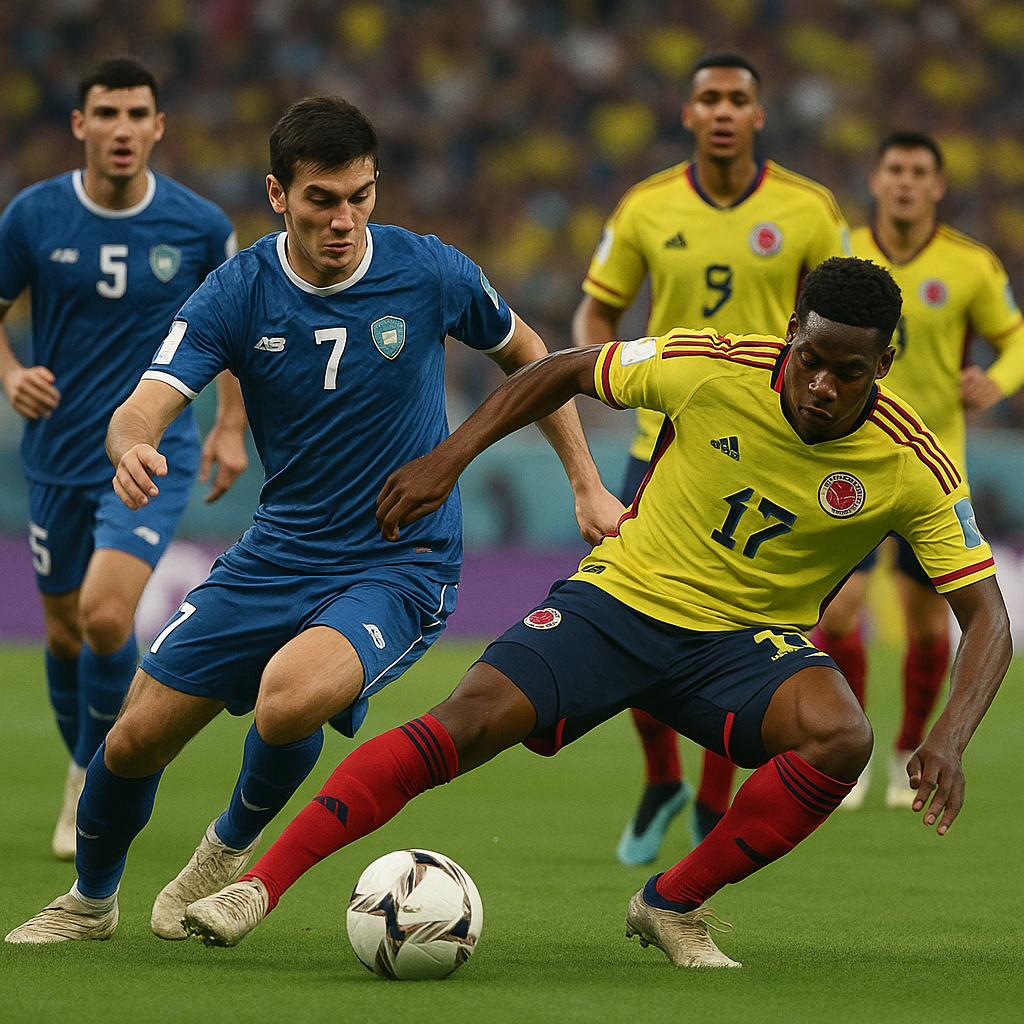
Uzbekistan’s 1-3 group-stage defeat to Colombia in the FIFA World Cup Group K represents a significant setback, underscoring structural deficiencies and tactical vulnerabilities exposed by a far more experienced South American side. The result leaves Uzbekistan rooted at the bottom of the group with zero points and a negative goal difference, while Colombia's victory establishes them as early group favorites with three points and a +2 goal difference, shifting momentum decisively in their favor.
From the opening whistle, Uzbekistan struggled to impose its intended structure, particularly in transitional phases. Colombia’s fluid midfield rotations disrupted the Uzbek defensive lines. The home team’s typical compactness was breached repeatedly, especially on the flanks where Colombia’s quick wide players exploited space behind the advancing full-backs. Uzbekistan's inability to contain these transitions led to a high-risk defensive shape that was punished three times.
Offensively, Uzbekistan managed a lone goal, which though evidence of their technical capability, was too isolated to alter the match dynamics. The lack of effective pressing and coordinated positional play in possession resulted in limited sustained pressure on Colombia’s defense. Moreover, Uzbekistan’s midfield appeared overloaded at times, unable to link defense and attack efficiently, which impeded their ability to control the rhythm or break Colombia’s lines.
Discipline and game management were not the defining issues here, as no significant cards or disciplinary incidents altered the flow. Instead, the tactical gap highlighted the need for Uzbekistan to improve squad depth and versatility, particularly to adapt under pressure and against higher-caliber opponents. This match exposed that current tactical schemes may not withstand the intensity and technical precision presented at this World Cup stage.
Looking forward, Uzbekistan must reassess its defensive transitions and seek more dynamic midfield linkages if they are to remain competitive in Group K where Portugal and Congo DR await. This loss complicates qualification prospects and places Uzbekistan’s hopes squarely on their ability to learn quickly and fortify structural integrity in upcoming matches.