
World Cup
Group E: Ecuador and Both Under Pressure

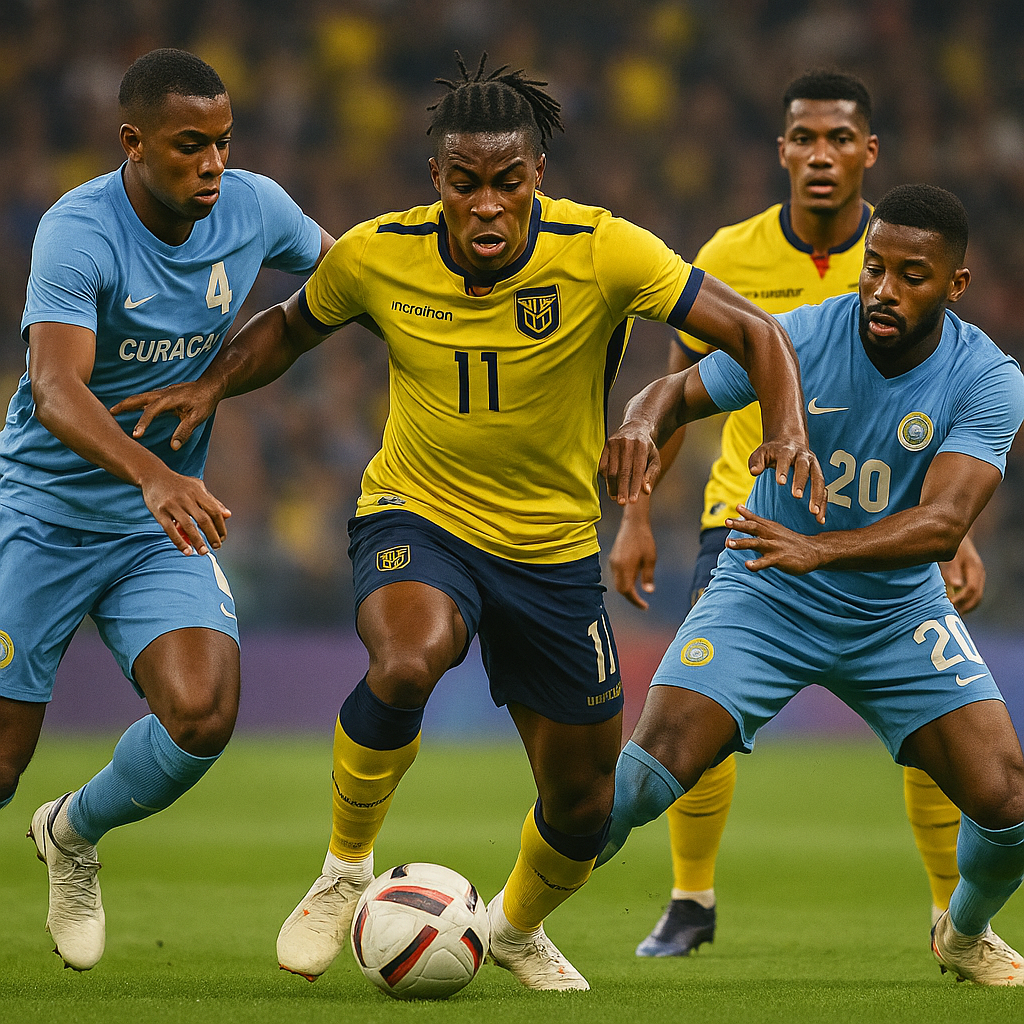
Ecuador’s restless group stage begins with a stalemate against Curaçao
Ecuador’s World Cup campaign in Group E opened with a goalless draw against Curaçao, a result that leaves more questions than answers about their tactical identity and the challenge ahead. Both teams shared the points, but neither could impose a decisive structure on the other.
The central tension of this match was Ecuador’s struggle to translate possession and territorial advantage into concrete attacking threat. Their shape oscillated between a 4-3-3 and a compact 4-4-2 block, aiming to balance defensive solidity with forward intent, but lacked the fluidity or incisiveness to unlock Curaçao’s disciplined midblock. Meanwhile, Curaçao relied on organized defensive transitions and low-risk buildup, content to frustrate rather than aggressively counterattack.
The key shift came in moments when Ecuador tried to accelerate transition phases. Despite occasional bursts into Curaçao’s half, Ecuador’s vertical passes lacked precision, and their final-third combination play was unable to breach tightly set defensive lines. This inefficiency was compounded by an absence of penetrating wide play or a clear plan to target defensive mismatches. Curaçao’s defense absorbed pressure effectively, denying Ecuador clear cut opportunities and forcing the hosts into speculative shots rather than calculated attacks.
Discipline remained largely intact, and the lack of cards reflected a cautious, tactical approach on both sides rather than reckless challenges; an understandable consequence given the stakes. However, the draw keeps Ecuador’s Group E outlook precarious. One point and zero goal difference after their first match place pressure on subsequent fixtures, especially against stronger opposition such as Germany and Ivory Coast.
This match revealed Ecuador’s current limitations in controlling tempo and creating sustained attacking momentum under World Cup intensity. With stiff competition to follow, there is an imperative to sharpen transitions and increase attacking diversity. The pattern of territorial control without end-product cannot persist if Ecuador wants to advance beyond the group stage.