
World Cup
In a World Cup landscape persistently reshaped by tactical conservatism and defensive pragmatism, the

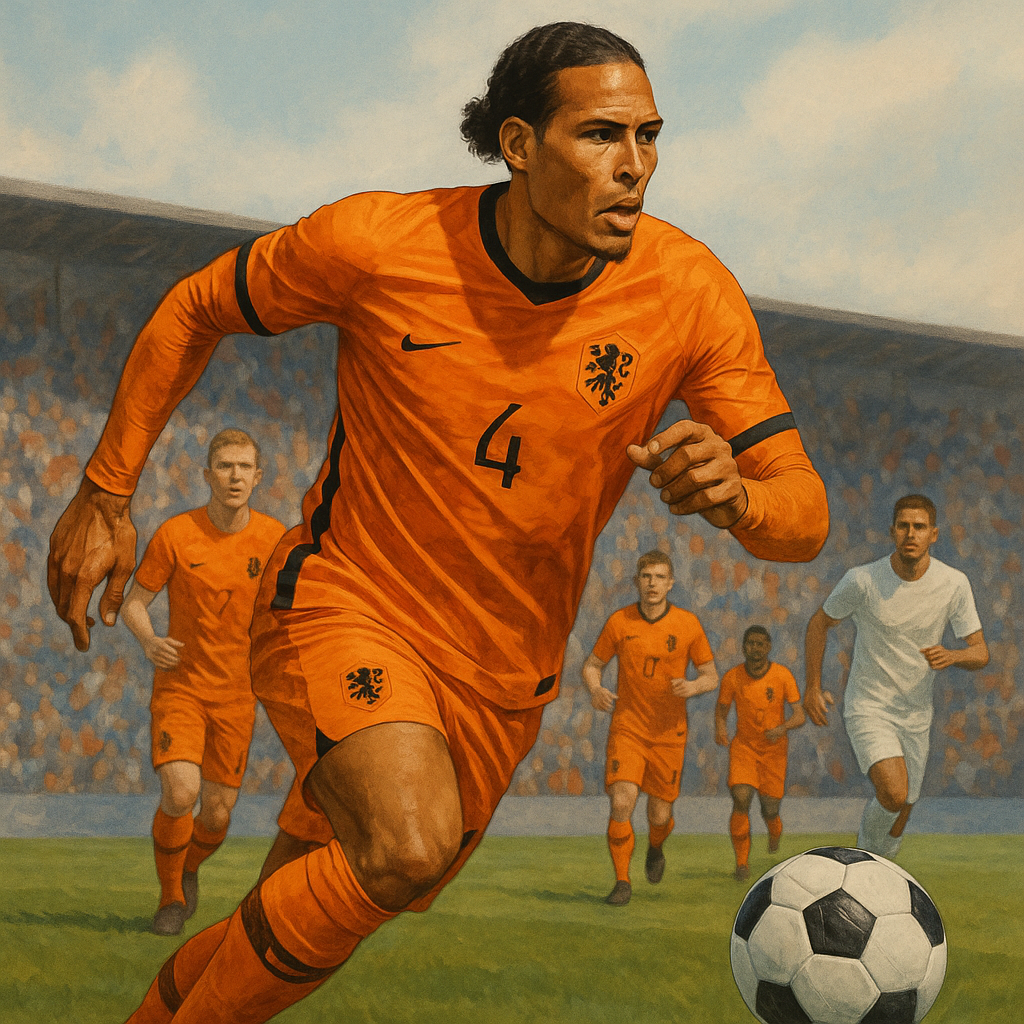
In a World Cup landscape persistently reshaped by tactical conservatism and defensive pragmatism, the Netherlands assert themselves as a compelling contradiction—steeped in total football’s idealism yet pragmatically refined for modern demands. Group F presents a manageable yet nuanced set of challenges, one that tests both their ideological coherence and adaptability against the often starker realities of tournament football.
The Oranje’s strength lies foremost in their structural fidelity, a system that insists on positional fluidity married to disciplined spatial occupation. This is not mere stylish rebellion but a meticulous engineering of patterns—vertical compactness enabling swift transitions from cautious buildup to incisive attack. Their 5-3-2 or 5-4-1 hybrid base, far from a tactical retreat, is the backbone that facilitates controlled overloads and balanced defensive density, a blueprint that prioritizes collective synchronization over individual moments of brilliance. It is a precise reacclimation to robustness without surrendering the offensive instincts that define their identity.
Historically, the Netherlands have oscillated between the heights of near final glory and disappointing implosion, a pendulum swung by flaws in mental fortitude as much as tactical flaws. The 2014 campaign exemplifies this dualism—electrifying football halted by the fine margins of knockout football's ruthlessness. In 2022, their narrative is cautiously optimistic. The squad, rich in emerging talents polished through the crucible of competitive European leagues, embodies a blend of technical prowess and mental recalibration. The challenge will be in maintaining coherence when pressed—will their system bend without breaking under relentless high-stakes pressure?
Expectation management is equally crucial. Their group opponents demand respect but do not inspire dread, allowing the Oranje to impose their tempo and assert control through intelligent, high-possession phases interspersed with rapid, vertical ruptures. Success here demands precision—not just in passing sequences but in game management and psychological resilience. An uneven tempo oscillating between relentless dominance and patient containment will be the hallmark of their approach.
In sum, the Netherlands arrives at this World Cup not merely to participate but to reaffirm that football remains an idea, an orchestrated harmony of space, movement, and principle, before it ever crystallizes into a scoreline. This team’s trajectory will be defined less by flamboyant improvisations than by the quiet, iron discipline of a system that demands excellence without compromise. For the Oranje, the aesthetic and the effective are inseparable—failure, when it arrives, is a failure of holistic coherence, not a lack of individual quality.