
World Cup
Group F: Netherlands and Sweden Under Pressure

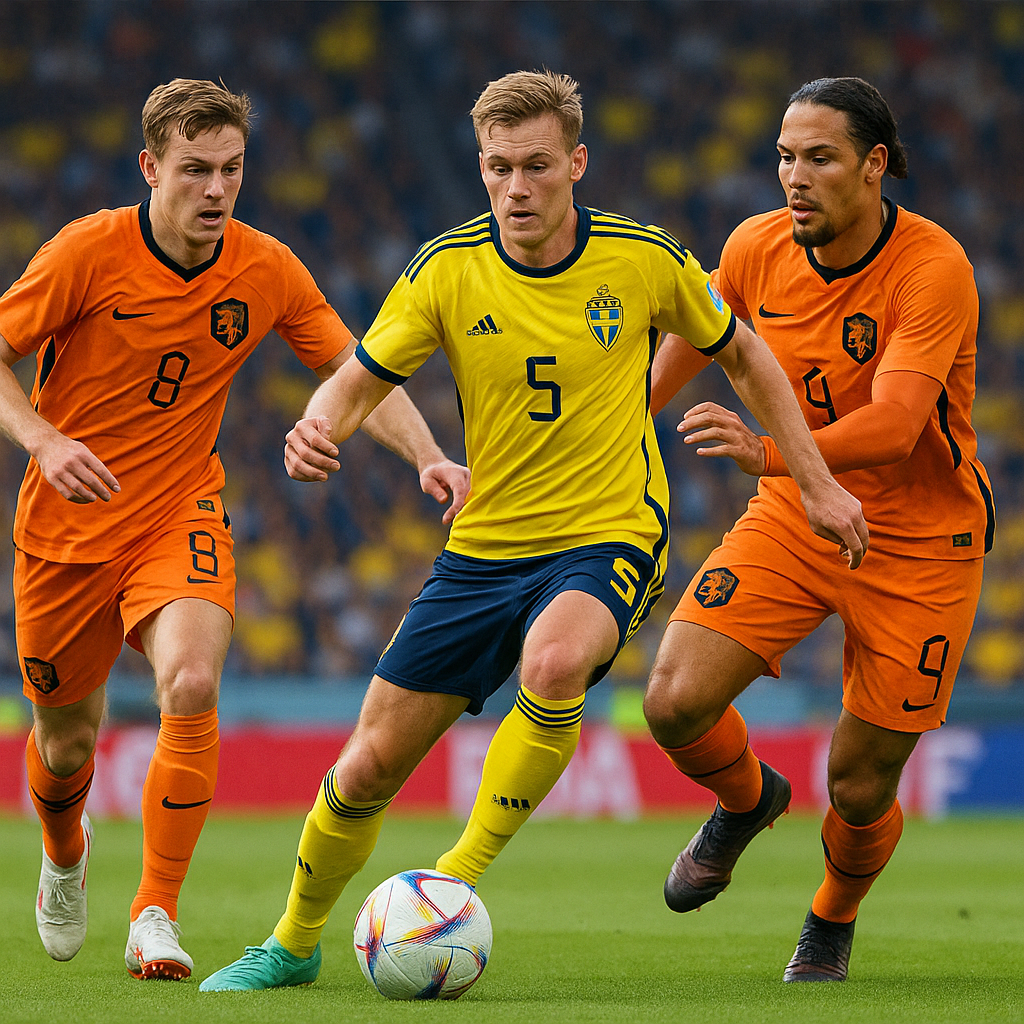
Netherlands assert tactical dominance in emphatic 5-1 victory over Sweden
In a World Cup Group F clash that reshaped the early dynamics of the group, the Netherlands dismantled Sweden with a clinical 5-1 triumph, simultaneously reinforcing their attacking philosophy and questioning Sweden’s defensive organisation. This result propels the Dutch comfortably towards qualification, highlighting their structural coherence and strategic clarity, while consigning Sweden to a precarious position requiring urgent recalibration.
From the outset, the Dutch approach articulated an insistence on high tempo and positional fluidity, blending control with direct verticality in possession transitions. The Netherlands exploited Sweden’s habitual defensive rigidity, stretching their backline with intelligent rotations and wide overloads that unpicked Sweden’s shape. This tactical flexibility was not merely aesthetic—it underpinned the physical and mental dominance evidenced by the four-goal swing in goal difference, a crucial margin in this tightly contested group.
Sweden’s defensive framework appeared brittle under sustained Dutch pressure, failing to adapt dynamically to spatial exploitation. Their inability to compact effectively between lines and regain structural integrity after transitions opened corridors that the Netherlands exploited with precision. The singular consolation goal for Sweden, while momentarily disrupting Dutch momentum, was ultimately insufficient to arrest the balance of control, which the Dutch sustained with methodical patience and strategic discipline.
This emphatic victory not only delivers three points but also sets a clear ideological marker: the Netherlands remain committed to an expansive brand of football that prizes structural clarity and tactical elasticity over mere resilience. Meanwhile, Sweden faces a reckoning; their response in subsequent matches must involve smarter spatial management and more proactive transitions to avoid further erosion of their position.
Ultimately, the Netherlands’ 5-1 dismantling of Sweden exemplifies how football as an idea—rooted in identity and tactical coherence—prevails on the world stage far beyond the surface of the scoreline. This is not just a win; it is a statement of intent and a declaration of tactical purpose in Group F’s unfolding narrative.