
World Cup
Ghana’s opening match of the 2026 FIFA World Cup against Panama on June 17 in North America presents a vital

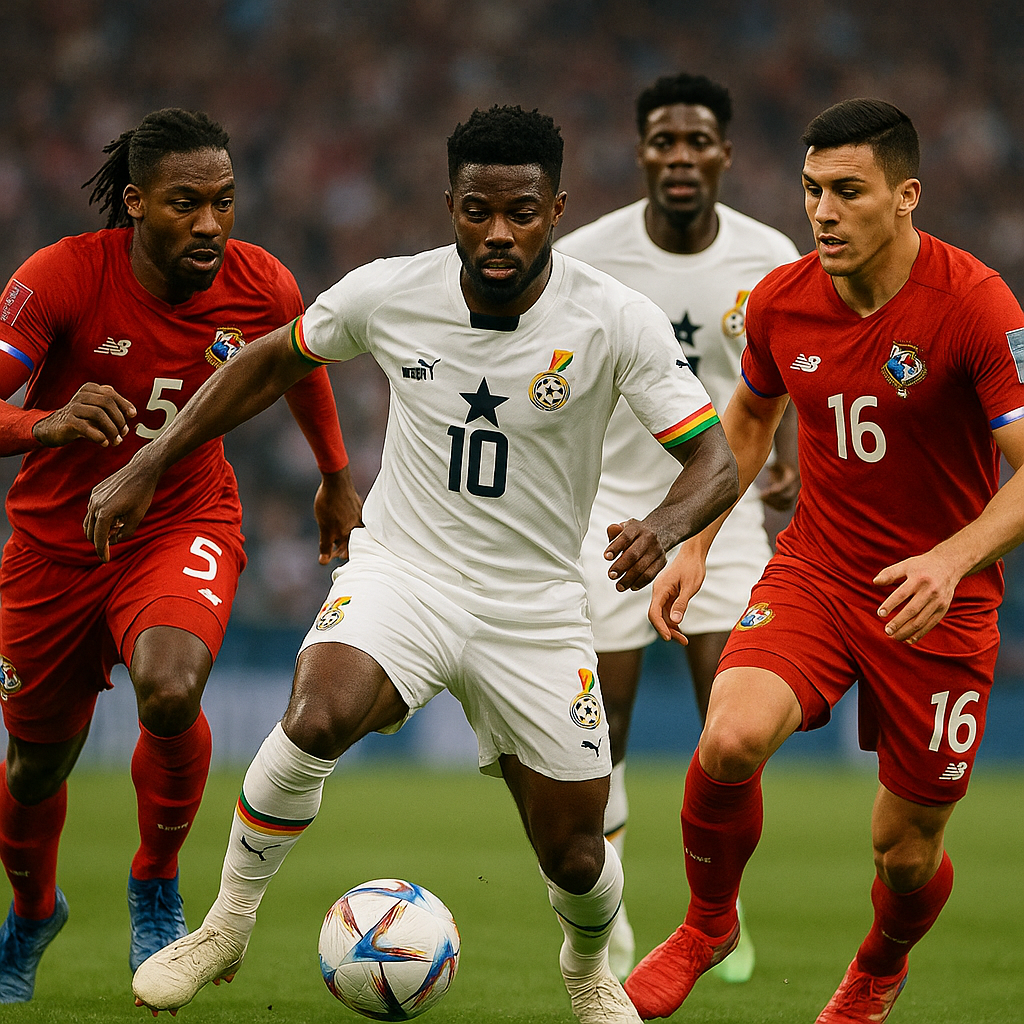
Ghana’s opening match of the 2026 FIFA World Cup against Panama on June 17 in North America presents a vital tactical challenge rooted in structure and transition management. Both teams arrive with different historical legacies and tactical profiles, setting a nuanced battlefield in Group L alongside Croatia and England.
Ghana, positioned as the home team for this fixture, has proven in recent years a dependable blend of physicality and technical discipline. The Black Stars’ strength lies in maintaining a compact, well-organized defensive block that quickly pivots into rapid transitions. Their success will depend on how efficiently they can link defence to attack, exploiting spaces left by an opponent who tends to adopt a deeper, more cautious stance.
Panama’s profile at recent World Cups, despite limited experience compared to Ghana, reflects a team with resolute defensive organization and reliance on counter-attacks and set-pieces. This suggests that Ghana must exercise patience and precision in breaking down a typically low block. Tactical nuance will be required in midfield; Ghana must assert control to disrupt Panama’s rhythm and reduce the effectiveness of quick breaks.
Key contextual factors include Ghana’s historical adaptability to different tactical systems, often shifting between a 4-2-3-1 and a 4-3-3 depending on the opponent’s disposition. This fluidity allows the Black Stars to exploit wider channels while maintaining central midfield solidity, crucial against Panama’s tendency to crowd the middle. The midfield duel will be paramount in establishing territorial dominance and reducing transition risks.
Moreover, Ghana’s transition defense must be alert to Panama’s direct style. Efficient tracking of runs in behind and timely pressing triggers will minimize counter-attacking threats. From a set-piece standpoint, Ghana’s aerial presence could prove decisive, considering Panama’s vulnerability in such scenarios shown at prior major tournaments.
Ultimately, this match offers Ghana a controlled environment to stamp their tactical philosophy early in the competition. Success here will hinge on disciplined structure, smart ball circulation, and measured aggression—ingredients essential not just to win but to build momentum in a challenging group. Any lapse in concentration or overcommitment could invite Panama’s signature counter-attacks, making tactical balance the defining factor of the encounter.