
World Cup
The opening fixture of Group F at the 2026 FIFA World Cup presents a compelling tactical contest: Netherlands

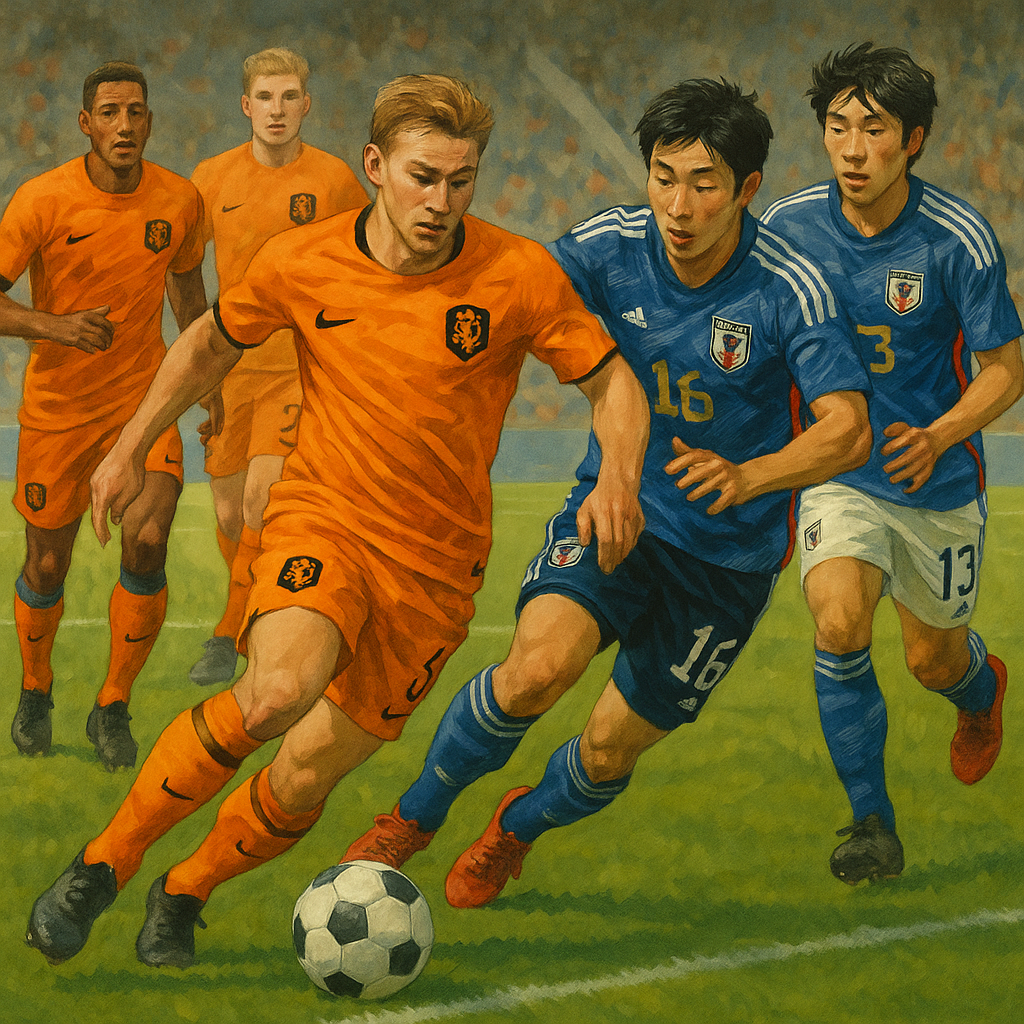
The opening fixture of Group F at the 2026 FIFA World Cup presents a compelling tactical contest: Netherlands versus Japan. Scheduled for June 14 at 20:00 UTC, this encounter pits a traditionally aggressive and possession-oriented European side against a disciplined and dynamic Asian team that has increasingly impressed on the world stage.
The Dutch side’s identity revolves around progressive attacking patterns often built on territorial dominance and vertical passing sequences aimed at swift overloads in wide channels. Their typical 4-3-3 shape supports fluid front three rotations and proactive full-back involvement, seeking to destabilize opposition defensive blocks through combined width and central penetration.
Japan, contrastingly, brings a more pragmatic but technically refined model. Historically, their approach embodies compact defensive organisation with rapid transitional bursts. Maintaining structural discipline to limit spatial opportunities, they excel at quick interchanges and exploiting opponent positional imbalances during counter-attacks. Their readiness to press selectively, rather than relentlessly, allows them to conserve energy for those offensive surges that carry genuine threat.
This match hinges largely on two interconnected tactical battles. First, the Dutch ability to maintain superior ball retention under pressure and their exploitation of half-spaces against Japan’s disciplined defensive lines. If the Netherlands can manipulate their wide players to draw Japan’s compact block laterally, they create pockets inside for their midfield runners. Conversely, Japan’s counter-attacking threat demands Dutch concentration on defensive recovery speed. Any overcommitment, especially by full-backs high up the pitch, risks exposure in behind.
Secondly, set-piece proficiency and transitions will matter. Both teams have leaned on strategic dead-ball opportunities in recent tournaments. For Japan, quick resets and exploiting second balls are vital, while the Netherlands’ aerial presence and rehearsed patterns in the opposition box make them a constant threat from corners and free-kicks.
In sum, this group opener is more than a clash of continents. It is a subtle chess game of spatial control, timing, and decision-making. The Netherlands must impose their tempo and unlock one of the most organised defensive displays Japan consistently produces. Japan, on the other hand, will seek to disrupt Dutch rhythm and punish the smallest tactical lapses. Clarity in shape, composure in execution, and resilience under pressure will define this intriguing World Cup duel.